The Ride-Out
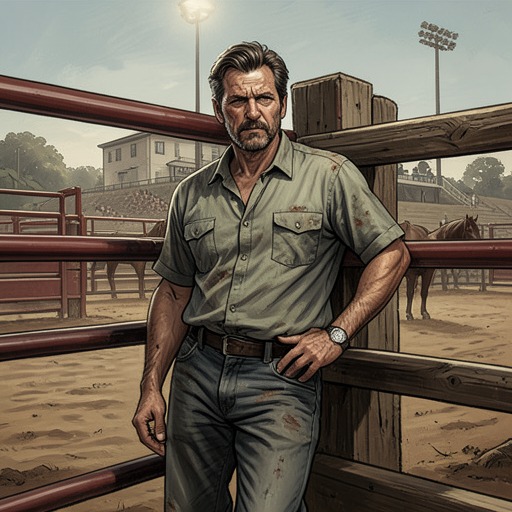
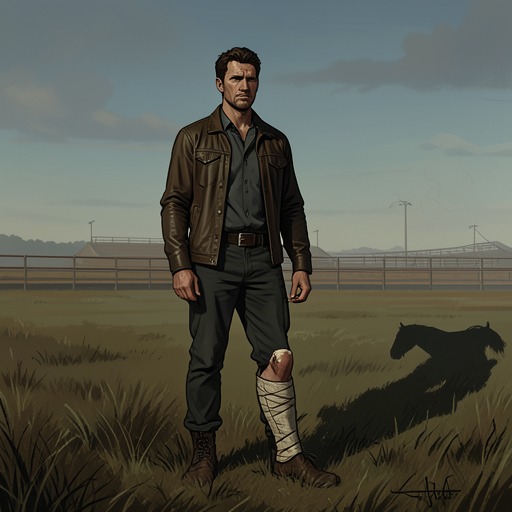
Cry MachoThe Ride-Out is a rodeo event devised by Mike Milo in which a cowboy rides a bucking bronc until either the rider is thrown or the horse goes quiet. By replacing a fixed time limit with an uncertain contest of endurance, it gave a struggling show the galvanizing spectacle it needed and restored Mike’s position as a star. Its success, however, encouraged Howard Polk to make the event more prominent and to replace the relatively manageable broncs of the original conception with more difficult stock.
Origin and Rules
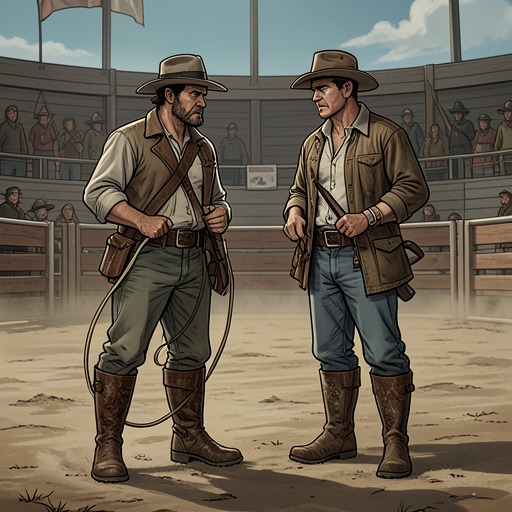
The event emerged when the rodeo was not drawing the response its organizers wanted. In an exchange with Howard Polk, Mike corrected Howard’s mistaken use of the word ingenious, then worried that the small humiliation might cost him his job. Instead, that afternoon he proposed a new attraction: let a cowboy ride a bucking bronc all the way to a finish, ending only when the man was bucked off or the horse settled. The idea gave Mike a way to answer the show’s need for a heart-stopping feature at a moment when his position seemed uncertain.
Before the change, the rodeo used the ordinary competition limits: eight seconds on a bareback horse and ten seconds on a saddle bronc. The Ride-Out discarded that clock-based endpoint. Mike imagined choosing a bronc that bucked well but was not too wild, a dink rather than an especially dangerous animal. The rule made the outcome depend on which of the two—rider or horse—gave way first. The event’s name and format thus emphasized continuation: the ride was not over merely because a prescribed number of seconds had passed.
Success and Escalation
The new event proved immediately popular. It was novel, attracted attention in the papers, and brought crowds to the rodeo. Placed at the end of the show, it sent audiences out screaming, and Mike became a star again. The Ride-Out therefore changed more than the structure of one ride: it gave the program a climactic attraction and re-established the public value of a performer whose reputation was tied to riding skill.
That success also altered the event’s place and degree of risk. Howard Polk later added another Ride-Out near the front of the program, immediately after the Grand Entry, so that the show would begin with a stronger attraction. Then he began providing fresh bucking stock to increase the excitement. The distinction from Mike’s original proposal is consequential: the first concept called for a bronc that was not too wild, but none of the newer animals was a dink. The event that had been designed around a dramatic yet controlled test was being intensified for spectacle, with the horse’s difficulty raised rather than the ride’s rules changed.
The Ride in Performance
At the performance described in the book, the arena clears after the previous bronc leaves the field. Music swells and dies, and the loudspeaker announces the special event as a ride continuing until the man is thrown or the horse goes quiet. The introduction presents Mike as the rodeo’s star, citing his three National Finals wins, the Dallas Buckle for bareback riding, and nine Cattlemen Trophies. It then names Tabasco as the hot bronc he is about to ride bareback, joining Mike’s established reputation to the immediate challenge of a particular animal.
The crowd answers the announcement with applause, whistles, and shouts. Mike nods to the chute boss, who tightens Tabasco’s flank strap. As the strap irritates the horse, Tabasco rears and bucks; Mike drops onto his back, and the bronc erupts into the air and kicks the slat boards. The passage shows the format beginning in action rather than explaining it abstractly: a tightened strap initiates the ride, and the announced contest becomes a physical struggle between rider and horse. The supplied account ends as the ride begins, so it does not establish whether Mike is thrown or Tabasco eventually goes quiet.
The Ride-Out’s central tension lies in the gap between a simple rule and an uncertain spectacle. Its endpoint is clear, but neither the duration nor the outcome is fixed in advance. That openness helped distinguish the event from ordinary timed competition and made it a compelling finale; the later choice of increasingly difficult broncs sharpened the same uncertainty. The format that returned Mike to stardom thus carries a built-in pressure: the audience’s excitement grows from watching a contest whose finish cannot be scheduled.